Top 20 Fresher Interview Questions With Best Answers!
Top 20 Fresher Interview Questions With Best Answers!
20 fresher interview questions and their answers.
Confidence: A Core Interview Problem
The thing that most candidates lack so often isn’t qualification or skill, but the confidence to handle the questions thrown at them. For this very reason, they find themselves lost and confused during the interaction. Knowing common questions beforehand can be very helpful for presenting a more confident self in front of the interviewer.
Common Fresher Interview Questions
For fresher candidates who are facing interviews for the first time, we bring here the Top 20 fresher interview questions and their best answers:
1. Tell me about yourself.

A common icebreaker, this is the candidate’s chance to set the tone of the interview and to present themselves in the best possible light.
Why this question:
The interviewer won’t jump to level difficult. They are experienced enough to handle all type of interviewees so the first question is normally to make the person comfortable. This doesn’t mean that the answer isn’t considered.
What are they ‘really’ asking:
It’s easy amble through on this one. After all, you have known yourself for many years. However, if you go into this without any preparation, then all those years won’t count for much.
By asking this question, the interviewer usually intends to know things beyond your resume.
How to answer:
Prepare well for this question and answer smartly. It would be better if you give a quick but well-defined summary of your background.
Here are a few cues:
- Talk about your professional self, precisely.
- Don’t go into your whole life story.
- Talk about your achievements and strengths,
- Indulge in specifics, but don’t narrate your resume.
The Right Answer:
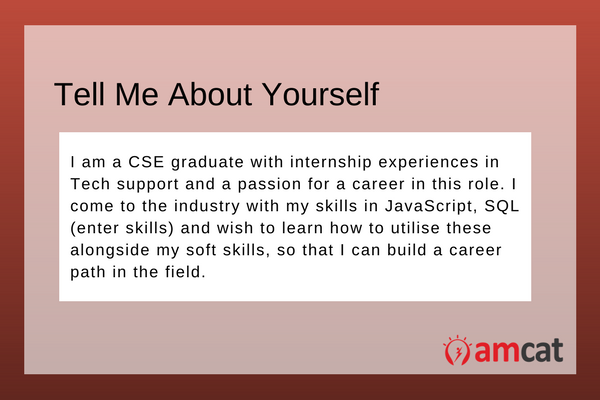
Read more on how to answer Tell Me About Yourself in a job interview.
2. Why should we hire you?

Usually positioned mid-session or near the end, this one from the set of fresher interview questions is a chance to portray yourself as the most ‘fit’ candidate for the position.
Why this question:
Direct and to the point, it’s not a chance to talk about why it’s a good opportunity for you. Afterall, you were shortlisted and did beat so many applicants to sit on the hot seat and that means something.
It’s a self-analysis to check your suitability for the position being offered.
What are they ‘really’ asking:
By asking this question, the interviewer usually wants to ask “What makes you best-fit for this position?”
How to answer:
Focus on your qualifications and skills and how they can help the company.
- Start with your professional persona and move on to how you stand out vis a vis others with the same qualification.
- Match those to the job description for the position
- Add traits that will help the company’s business position and show you in line with the company’s business ideologies and processes.
- Improvise according to the company’s requirements.
The Right Answer:
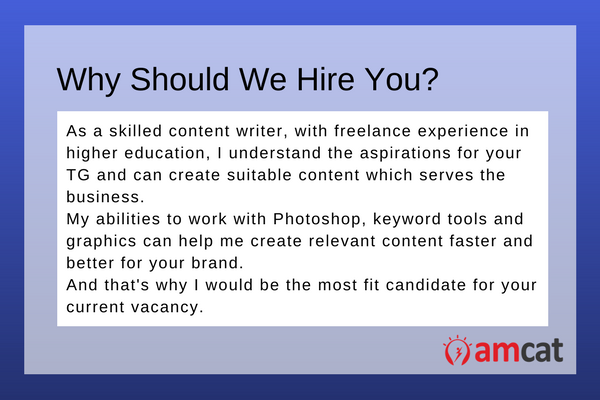
If you need more help on handling this question, take a look at How to handle “Why Should We Hire You”.
3. What are your strengths?

Most candidates take it for granted that they will know the answer to this question. However, this (over)confidence costs them in the end as they find it hard to frame their answer. Yes, it is an easy question, but that is the whole point of it.
Why this question:
This question is to test how you will respond to something like this and that is why you need to put in some thoughts and preparations to get it right. Despite being one of the most widely asked questions in job interviews, interviewees tend to mess it pretty often.
How to Answer:
Do not use too many adjectives or go on with a list of strengths you have. Instead, sit, think, relax, choose one or two skills and explain why you consider having those strengths. Include strengths that the company is looking for. Some prior research will provide you with enough clues for that. And, even if you have an impressive list of strengths to your name, try not to come across as too arrogant.
Stay positive throughout your answer. You can begin by saying – “I have strong ethics while at work. When I have to meet some deadlines at work, I try to complete it within the stipulated time or ahead of that. While I was in my college…”
The Right Answer:
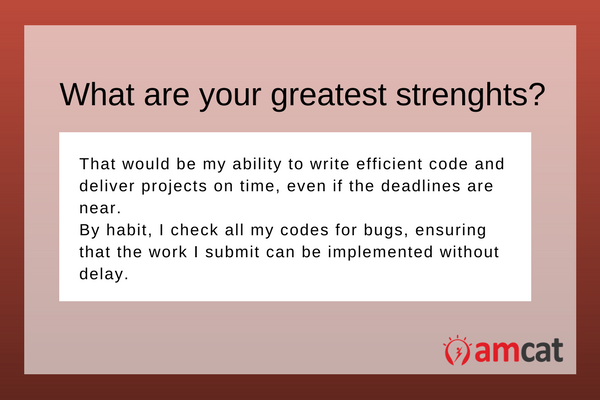
You can read up more on how to answer this particularly tricky job interview question by clicking on How to answer “What are your strengths and weaknesses?”
4. What are your weaknesses?

The question that follows is something you can amalgamate with your previous answer.
Why this question:
According to an interesting write-up on ‘The Business Insider‘, – What Hiring Managers Really Want To Know – the question is a test of character. If I were to liken it to an onion, it is a question with multiple layers, which can be peeled through for each of them.
The first layer is obvious – there are looking for cues or red flags on why they should not hire you. Next, they are looking at your ability to be prepared and maintain composure in a difficult setting. They also want to know how self-aware you are and whether you’re doing anything to overcome them.
What are they ‘really’ asking:
Summarising the points given above, here are the real questions nestled within a broader ‘What are your weaknesses’.
- Why should we not hire you?
- How do you react in a pressure situation?
- How self-aware are you?
- Would your weaknesses impact your job performance?
- What are you doing to improve on your weaknesses?
How to Answer:
Do not say that you don’t have any because that’s arrogant, overconfident, and practically not true! Instead, talk about your weaknesses and talk about how you are working towards eliminating them.
Do not count waking up late, drinking, smoking, etc. as your weaknesses.
The Right Answer:
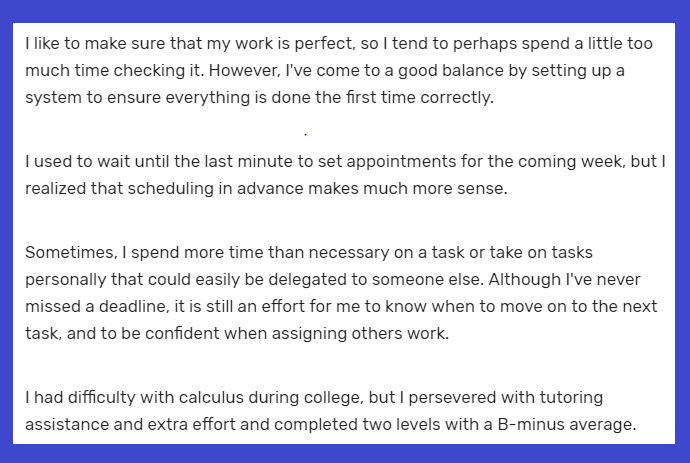
5. What are your long-term goals? What are your short-term goals?

This is to check your commitment towards the job. A casual query like this can turn into a probe into your maturity and the levels of dedication you maintain towards your overall work graph.
Why this question:
From a recruiter’s perspective, the job interview is the best time to get focused information from a candidate, which will help them make a decision about them. Asking about their goals, both short-term and long-term goals, helps these recruiters understand where they are coming from and what plans they have for their lives.
What are they ‘really’ asking:
This also lets them decide whether the candidate would be a good hire and would stay in the company. What motivates them and where would they go, if they face an opportunity in line with those goals – both internally and externally.
How to Answer:
Haven’t thought about your future, five years down the line, let alone in the coming six months? Start thinking. This is how you can answer this fresher interview question.
- Think of what you want to do in 6 months, 1 year, 5 years
- Include the Company in your plans
- Begin explaining short-term goals.
- Include long-term goals, but don’t talk about salary or explicit details
So, don’t say you want to earn a lot of money and then run away to Prague. Yes, there are interviewees casual enough to answer that. On the other hand, don’t say your long-term goal would be getting “your chair” (the interviewers). That will pretty much take away the job from you.
The Right Answer:
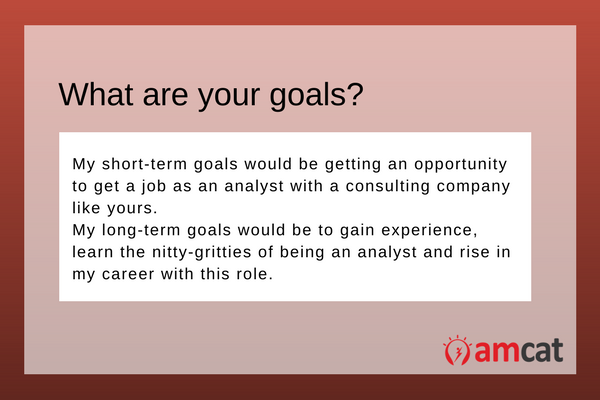
To know more about creating your work goals, we recommend this read.
6. How well do you handle stress/pressure?

This is a very common fresher interview question that you will come across.
Why this question:
When an interviewer asks you this question, he is keen on knowing how you are affected by pressure and what is your way of managing it.
What are they ‘really’ asking:
The interviewer is checking for your composure, work ethics and how you actually stand against real-life situations.
They’re asking:
- What are your stress points
- Do they impact your job performance
- What do you do in a crisis situation
- What are your weaknesses – things which can put you in a crisis situation.
- How do you handle such a situation
How to Answer:
You need to be well-prepared for this in advance as you can’t get away by saying you are never affected by any kind of work pressure. After all, almost every individual get affected by work pressure at any point of time.
The best way you can answer this question is by giving specific instances from the past when you managed to do good in spite the tremendous pressure. That can give a clear picture to the interviewer about your ways of handling stressful situations.
The Right Answer:
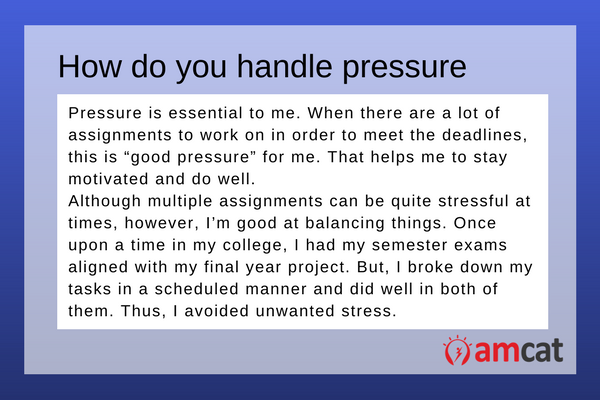
7. Are you willing to relocate/travel for work?

Moving to a new city can be an exciting idea, but when a recruiting manager asks you this question, he is looking for something different than what you are thinking. He wants to judge your level of enthusiasm and passion for the job role.
Why this question:
A recruiter who asks this question is more privy to the demands of the job position than the candidate. And they’re filtering candidates on different counts – one being flexibility and availability at different locations and the other being an inclination to go places for the job.
They are also checking on your enthusiasm and willingness for the job on offer and the company.
What are they ‘really’ asking:
With this one question the recruiter asks you:
- Would you be open to travel for the job?
- Would you be open to transfers for the job?
- Would you be able to come in, when required?
- Are you really keen on this job?
How to Answer:
While answering this question, emphasize on your willingness to work with the company. Show your enthusiasm for the job role.
Don’t respond with a ‘No’ even if you are not willing to relocate.
The Right Answer:
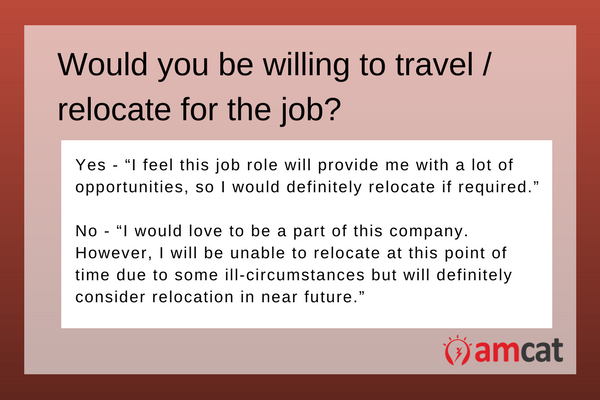
8. What are your hobbies?

This question is necessarily not asked to judge you on your job role. By asking this question, an interviewer wants to get an idea of how you are as an individual.
Why this question:
A recruiter might be interested in knowing about your health, energy level, or your ability to gel with your colleagues. Doing things apart from the job means that you are an all-rounder and your hobbies give an insight into the type of person you are.
What are they ‘really’ asking:
Specifically, the question behind the question on your hobbies and interests depends on who is asking it. If it’s the HR or the first-line recruiter, they want a better understanding of you as an individual and your commitment levels to your interests.
If it is from your reporting manager, then it’s to get a better sense of you and whether they would be able to get along with you, beyond the formal office structure.
How to Answer:
There are certain hobbies and interests that should obviously not be discussed in an interview. Even if your favorite time-pass is partying, it is advised not to say it at all. Same goes for activities like gambling, drinking, smoking, or any other illegal activity.
While answering this question, make sure that you are honest and your hobbies are genuine. Don’t say that you are a fitness enthusiast even if it’s been more than a year since you last hit the gym.
Whatever you say, be prepared for follow-up questions. For example, if you say you love watching movies, be prepared for the last movie you watched, or the type of movie that excites you.
In short, include these things:
- Mix professional and personal interests
- Mention positives – things that contribute to you (health, education, learning)
- Mention positives with community good – volunteering, green initiatives, helping others
- Include your passions and be prepared for follow-ups
The Right Answer:
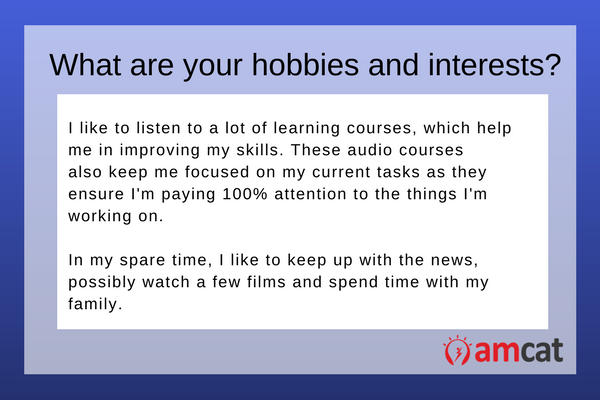
For more information, read about hobbies and interests which will make more employable.
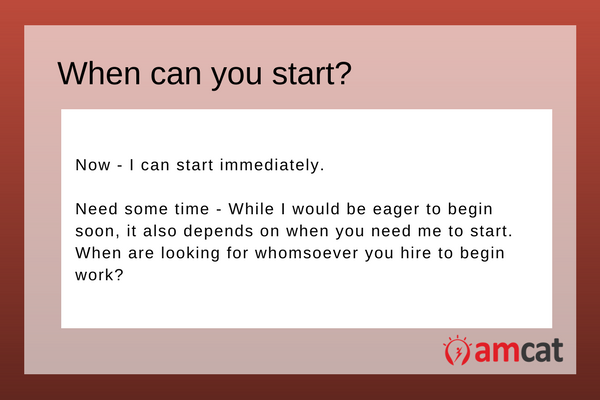
9. When can you start?

This may seem to be a simple question, but it isn’t! For most candidates, it can feel like the most exciting question of their interview. But please stay calm as this doesn’t necessarily indicate that you have been selected for a position.
Why this question:
Usually, employers ask this question when they hire for an immediate joining and the position is essential to company’s operations.
What are they ‘really’ asking:
The recruiters are judging your position right now – how eager you are for this position and how soon would they be able to close it, if they hired you.
A quick as soon as possible means you need this job straight up – maybe you’re between jobs and gives them an upper hand in the negotiation process.
How to Answer:
While answering this question, avoid sounding too desperate (even if you want to start it right at the moment!).The best way you can respond to this question is by conveying that you wish to start it as soon as possible.
- Communicate your eagerness to join soon.
- Factor in your current commitments – for a fresher these could be the time you graduate, any upcoming plans
- Give a clear date
- Ask about the company’s needs and requirements
The Right Answer:
10. Where do you see yourself in 5-10 years?

When a recruiter asks you this question, there may be a lot of answers arising in your mind – “I would like to move up the hierarchy”, “I want to be the best version of myself”, “At your role”, or “I want to see myself as a consultant.” However, you should refrain from saying any of these out loud in an interview.
Why this question:
An open-ended approach to knowing about your career goals, this is an attempt to learn about the maturity level of the candidate, their willingness and dedication to the prospective job.
What are they ‘really’ asking:
Repeating the above point, here are what they’re really asking:
- Your goals
- Your willingness to continue with the brand
- Whether you would be a good role fit
How to Answer:
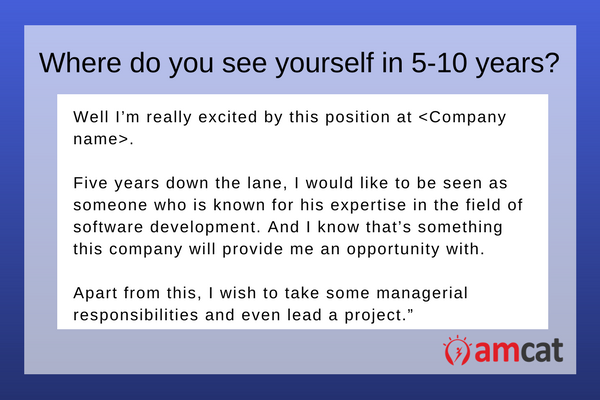
So, how do you answer this question? You can be honest and still answer them what they expect to hear from you. Just think about where this position can actually take you and how that is in line with your broader career goals.
The best you can do is be honest and try to keep your answer relevant to your job and the industry. Don’t share your plan of writing a novel in five years when you are applying for the position of a Programmer.
The Right Answer:
For more information, read our piece on Interview Questions: ‘Where Do You See Yourself In 5 Years’
11. What’s your dream job?

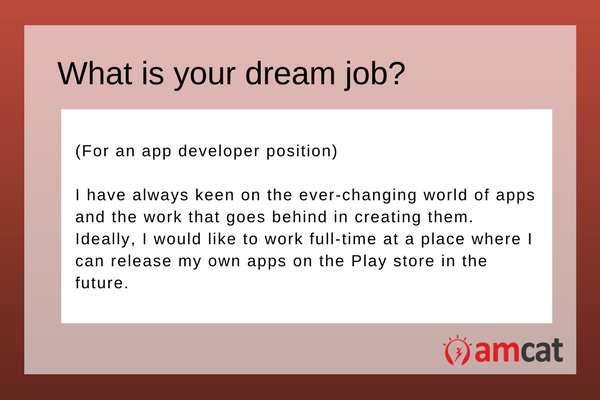
This is a very tricky question. It might happen that your dream job has nothing to do with the job for which you are being interviewed. Still, avoid mentioning it. Rather try connecting it to the position for which you are being interviewed.
Why this question:
Interviewers ask this question to know how this position motivates you. Or, whether you will stick to the position or you just want to take this up as a short-term assignment.
What are they ‘really’ asking:
When a recruiter asks you about your dream job, they’re really asking you these questions:
- What is your motivation
- What are your positive stress points
- Do these idyllic aspirations match our work environment
- Would you fit into the current role/organisation
There are also instances where the recruiter may not be a company employee, but a consultant. In that case, if they’re asking you about your dream job, they may have evaluated you as a good candidate for future positions and may connect with you, if they see something similar.
How to Answer:
Ideally, you should not answer specific job titles. Don’t share your ambitions about a job whose responsibilities are far from achievable while staying in the position that you are applying for. A good idea is to focus more on skills and not the designation.
Focusing on the industry is the key to answering this question.
The Right Answer:
12. Are you comfortable with late night and weekend shifts?

Another tricky question asked commonly – especially at startups, mid-size companies and with volume-oriented roles, like sales. So, be ready for this one if you’re going to one of these interviews.
Why this question:
The question doesn’t mean your company is planning on ruining your weekends. But depending on workload, companies do need flexible candidates who can handle the pressure at the workplace and work late when required.
What are they ‘really’ asking:
The recruiter is asking you:
- How flexible are you?
- Can you take initiative to sacrifice personal time for a situation?
- Can you handle workplace pressure?
- Can we rely on you to step up, if required?
How to Answer:
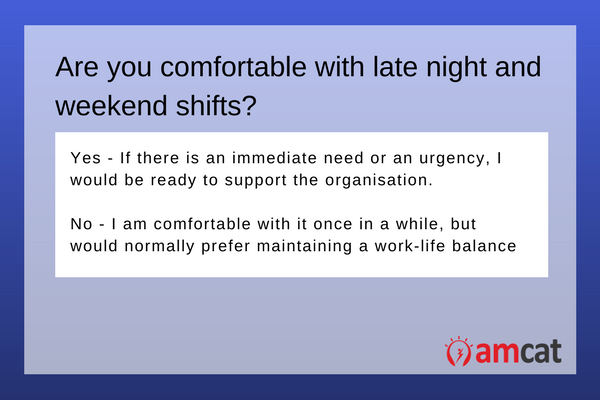
Ideally, a carefully enthusiastic response towards being occasionally willing to do so, is a good way to go.
If you aren’t comfortable with it for some reason, state the reason politely. Or you can just say that it would be fine once in a while but you normally prefer maintaining a work-life balance.
The Right Answer:
13. Create an imaginary difficult work situation and tell us how you will overcome it?

Making up an imaginary work situation on the spot can be difficult. It is considered one of the toughest interview questions which test a candidate’s natural characteristics that can’t be analyzed in a short interview.
Why this question:
Interviewers ask this question in order to know how you will deal with an unprepared situation that might arise during your work tenure.
What are they ‘really’ asking:
A basic, open-ended question this allows the interviewer to understand the candidate beyond scripted answers and the brief on their resume. It also lets them understand the likely ways in which the candidate would respond to challenges and the kind of situations they may face in their role.
How to Answer:
When this question is thrown at you, stay calm and composed. Go back to the past and think of any difficult situation you might have faced. It can be anything related to your past academics or professional career.
You can tell about the dilemma of choosing your stream in the college, or about the unconventional career path you had to choose for yourself. You can mention who helped you during that stage of your career. Or, if you had to choose an unconventional career for yourself, how you persuaded your family members.
If you can’t link this question to any incidence from the past, you can instead relate it to your job description of the current job. You should develop an idea of unusual scenarios that might arise while in the job and the possible outcomes of that. Avoid giving a long and unnecessary description. Your ideal response should be short and supported by relevant facts.
Comments
Post a Comment